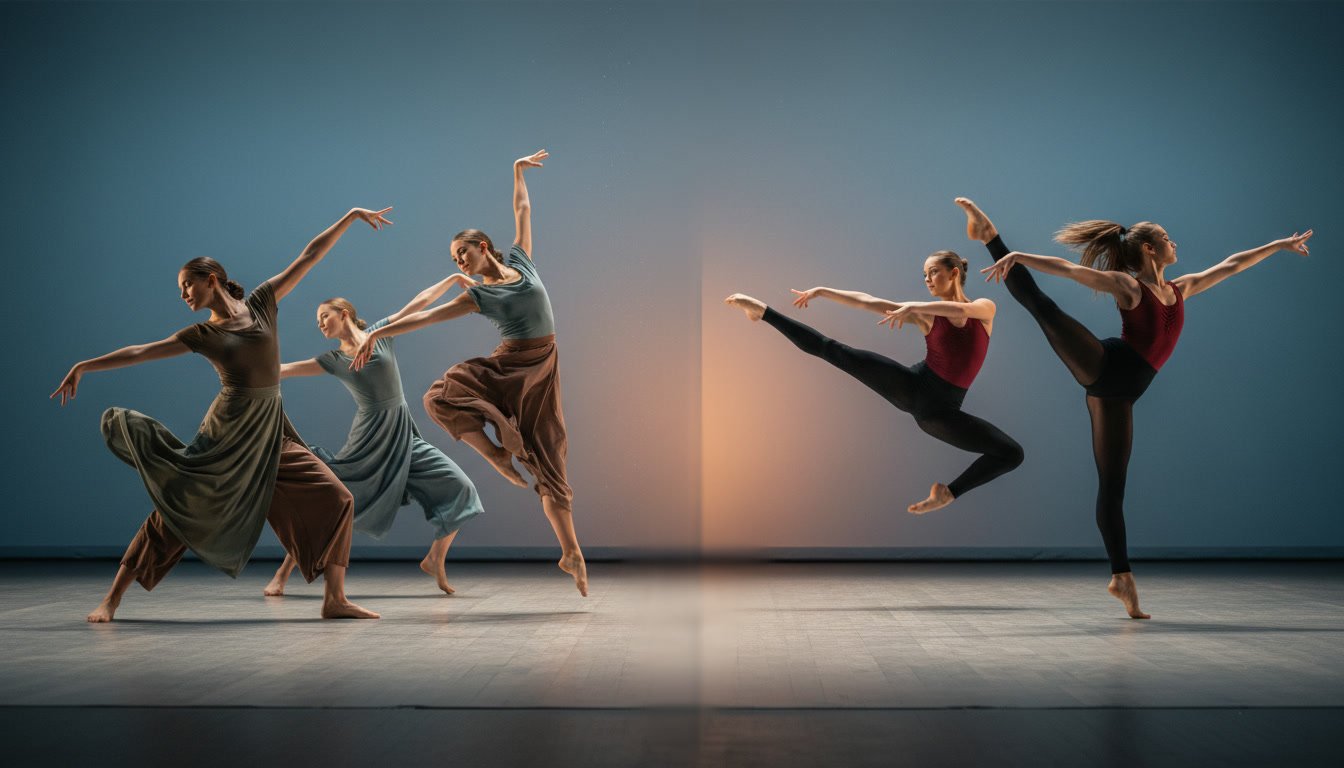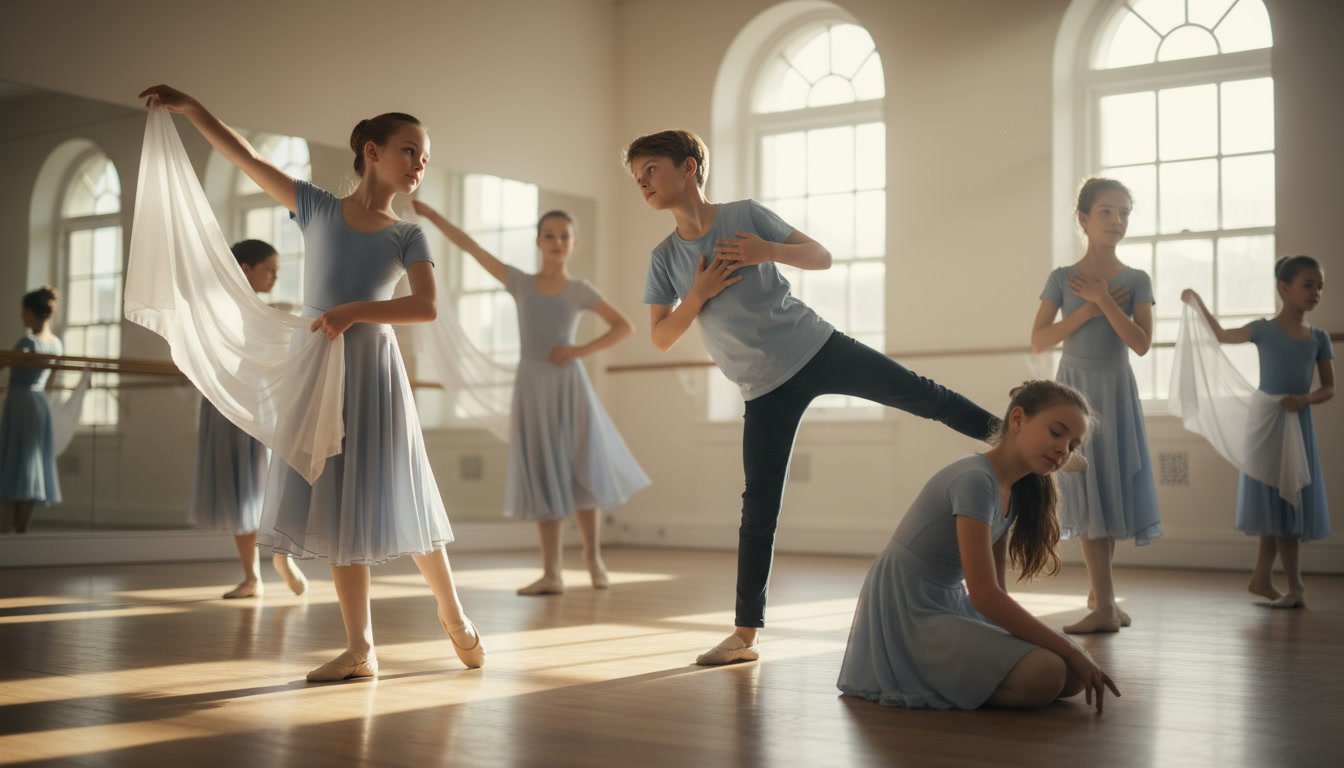
Lyrical dance classes teach children to merge classical ballet technique with powerful emotional storytelling, creating performances that communicate feelings through movement. This dance style combines the structural foundation of ballet with the fluidity of modern dance, allowing young dancers to explore both technical precision and personal expression. Students learn to interpret music and lyrics through their bodies, developing artistic sensitivity alongside physical strength. The result is a dance form that builds discipline while nurturing creativity and emotional intelligence.
What Makes Lyrical Dance Different from Other Styles
Lyrical dance occupies a unique space in the dance world. Unlike strict classical ballet that emphasizes predetermined positions and sequences, lyrical encourages individual interpretation within a technical framework. The movements flow continuously rather than hitting sharp poses, and dancers connect steps in ways that mirror the emotional arc of the music. This style differs from jazz in its softer quality and from contemporary in its closer adherence to ballet vocabulary. Children who study lyrical learn to be both technically precise and emotionally vulnerable, a combination rarely found in other dance forms.
The music selection also sets lyrical apart. Dancers typically perform to songs with meaningful lyrics, using the words as inspiration for movement choices. A song about loss might inspire slower, contracted movements, while an uplifting melody could translate into expansive, reaching gestures. This direct relationship between sound and motion teaches children to listen actively and respond authentically.
The Ballet Foundation Every Lyrical Dancer Needs
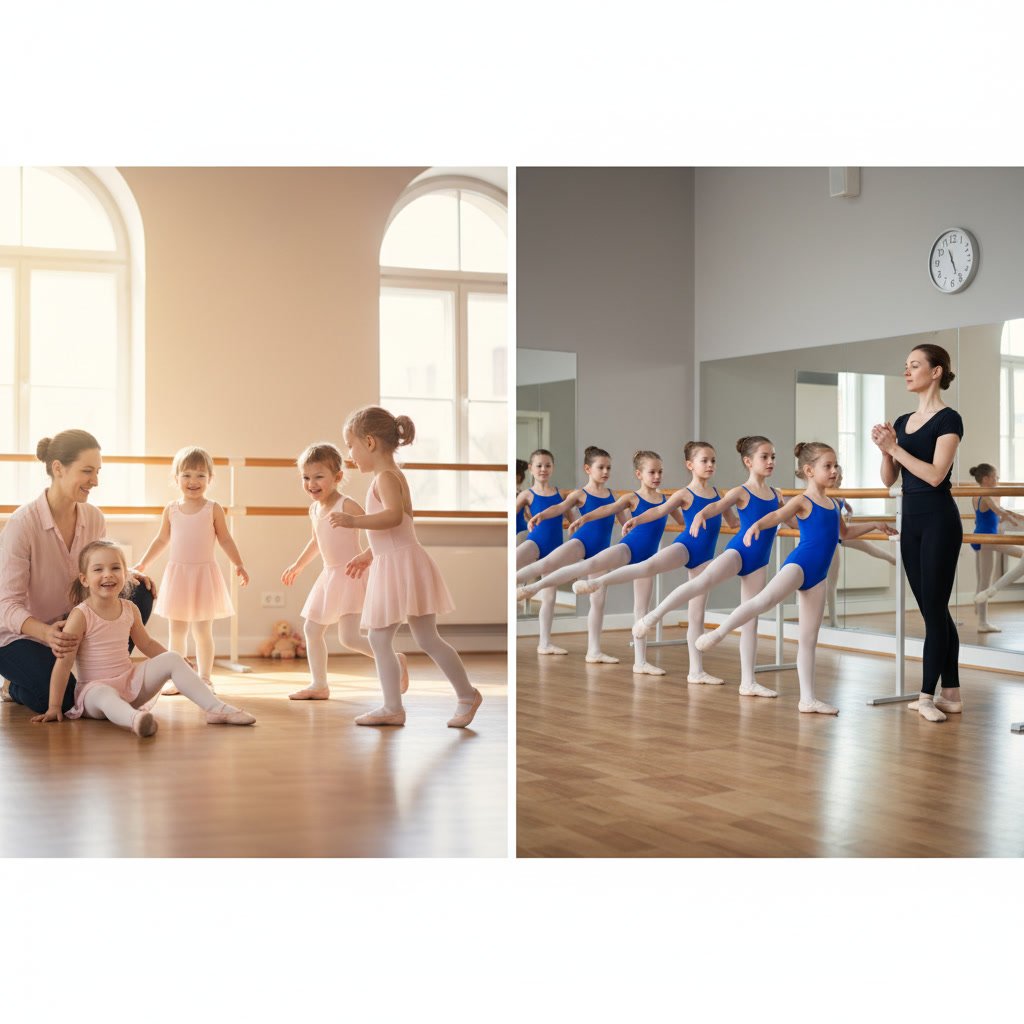
Ballet technique forms the structural core of lyrical dance. Students must first understand positions, alignment, turnout, and basic ballet vocabulary before they can effectively interpret emotions through movement. A solid ballet foundation ensures that when a dancer extends into an arabesque or spirals through a turn, the movement is both beautiful and anatomically sound. Without this technical base, lyrical becomes merely interpretive movement without the polish that makes it stage-worthy.
Most dance instructors recommend at least two years of ballet training before a child begins lyrical classes. This timeline allows young dancers to develop muscle memory for proper alignment, strength in their core and legs, and familiarity with French terminology. The investment in ballet technique pays dividends when students begin lyrical work, as they can focus on emotional expression rather than struggling with basic positions.
How Emotional Storytelling Develops Through Movement
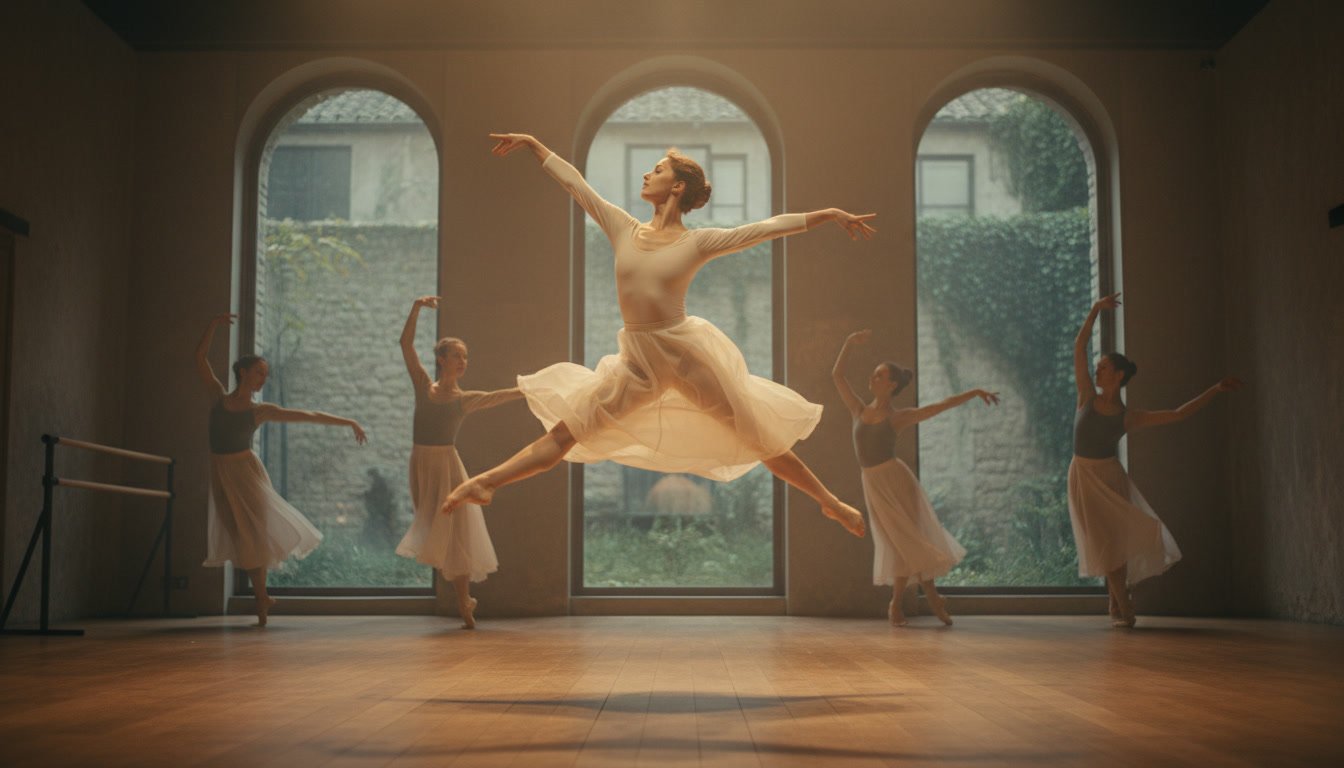
Teaching children to communicate emotion through dance requires a different pedagogical approach than purely technical instruction. Instructors guide students to connect personal experiences with movement qualities. A teacher might ask, “How would you move if you were reaching for something you desperately wanted but could never touch?” This question prompts dancers to explore extension, longing, and suspended movement. Over time, children build a vocabulary of gestures that carry emotional weight.
The process also develops emotional intelligence. Young dancers learn to identify and name feelings, then translate those internal states into external expression. This practice builds self-awareness and empathy, as students must imagine perspectives different from their own when portraying characters or narratives in choreography.
Age-Appropriate Progression in Lyrical Training
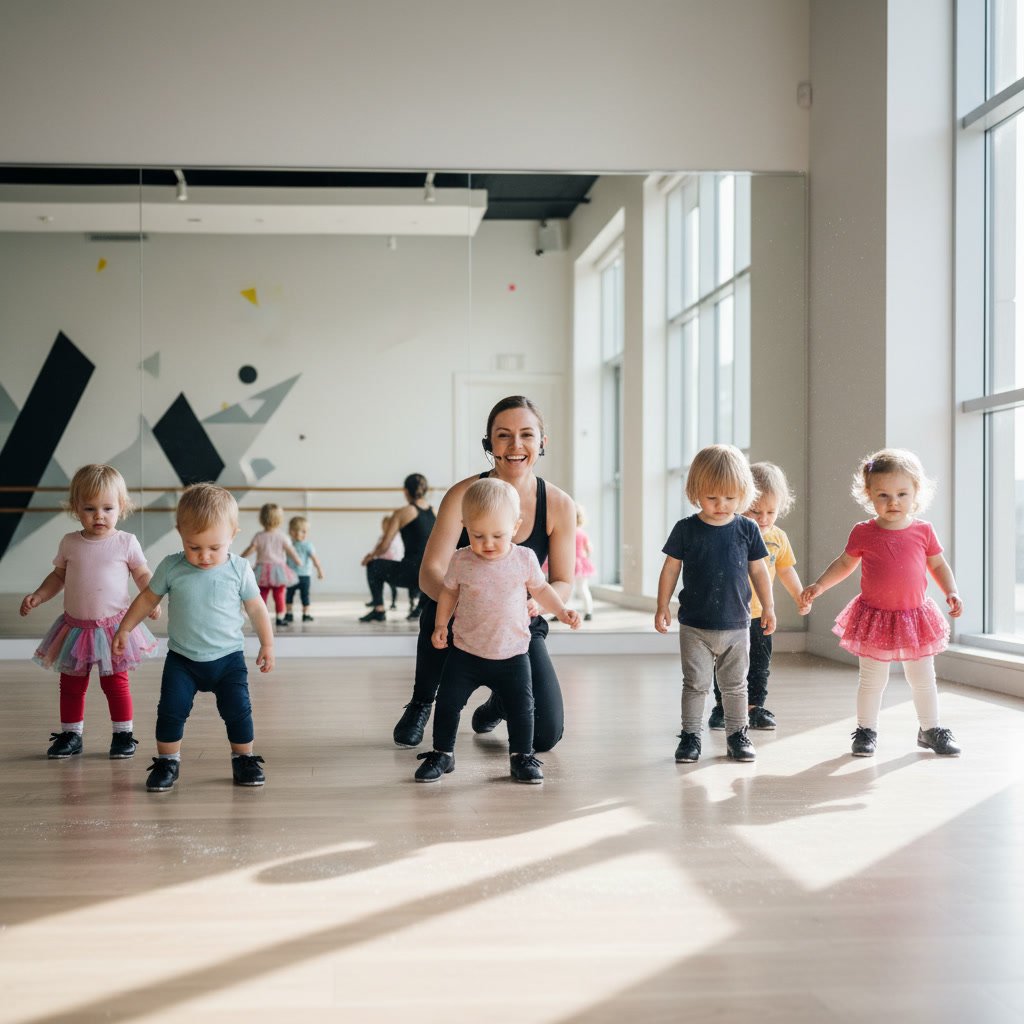
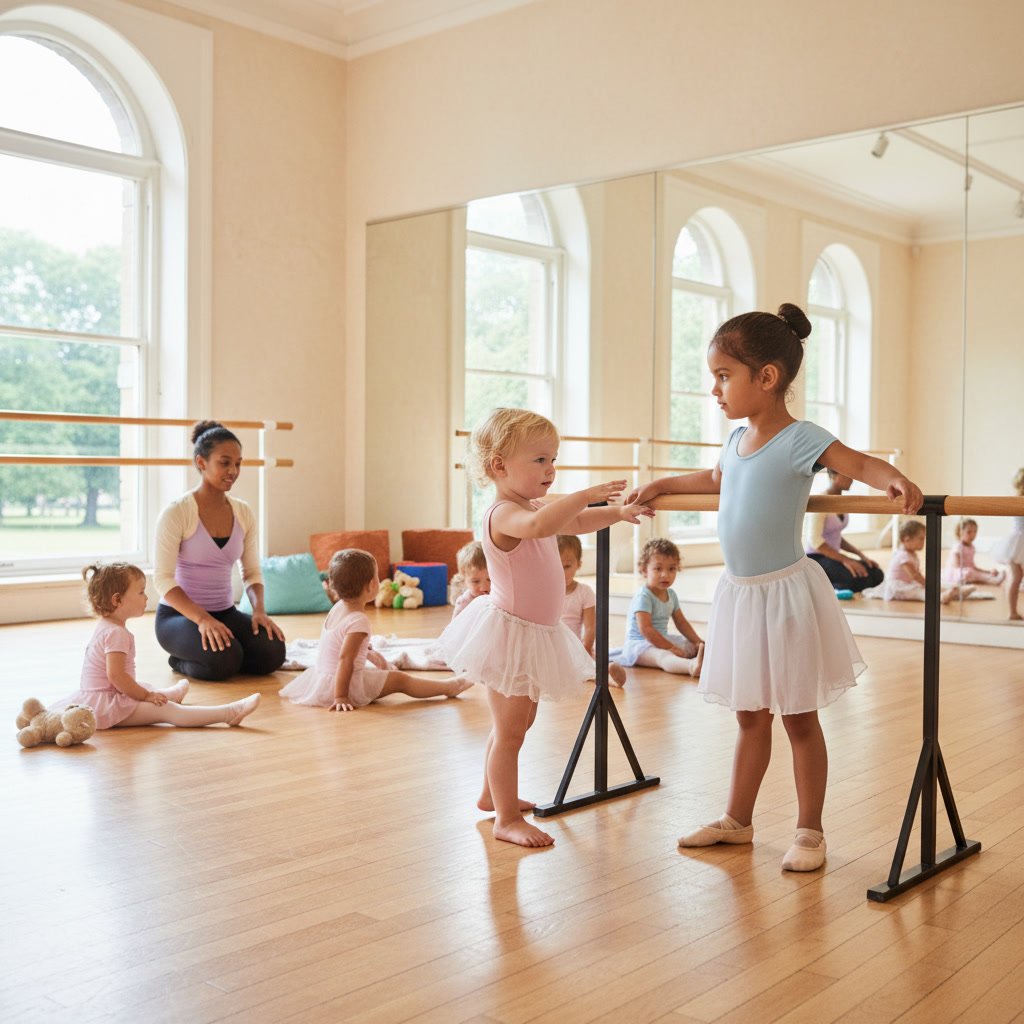
Children typically begin lyrical training between ages eight and ten, after establishing ballet fundamentals. Younger students lack the emotional maturity and technical control to fully engage with the style’s demands. Early lyrical classes focus on simple emotional themes like joy, sadness, or friendship, using age-appropriate music and straightforward narratives.
As dancers mature into their teens, the complexity increases. Choreography tackles more nuanced emotions and abstract concepts. Older students work with floor work, inversions, and partnering that require strength and spatial awareness. The technical demands grow alongside the emotional sophistication, creating a style that evolves with the dancer.
Five Physical Skills Lyrical Dance Builds in Children
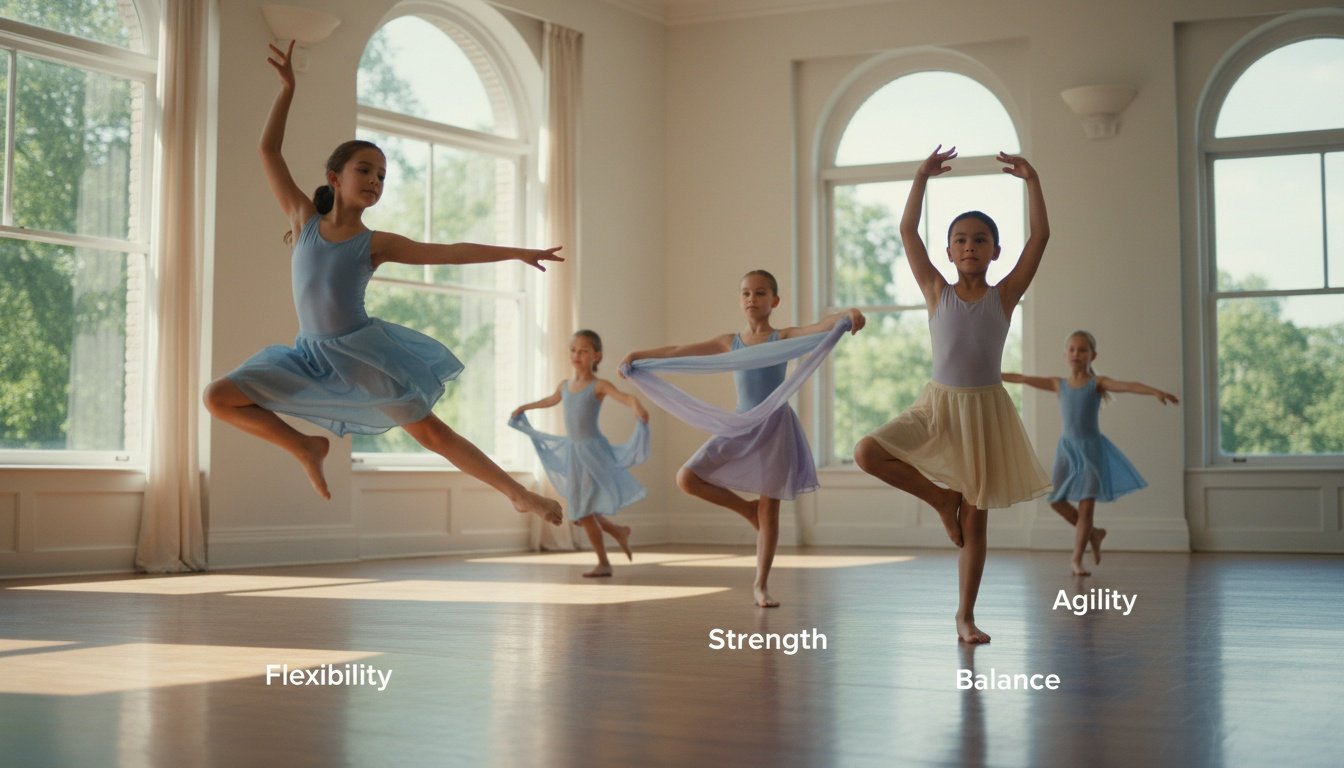
Beyond emotional expression, lyrical dance develops concrete physical abilities that benefit young bodies. First, it improves flexibility through sustained stretches and expansive movements that require extended range of motion. Second, it builds core strength, as dancers must control their center while moving through off-balance positions and fluid transitions.
Third, lyrical enhances coordination by requiring simultaneous control of arms, legs, torso, and head, all moving at different speeds and qualities. Fourth, it develops breath control, as proper breathing supports sustained movement phrases and helps dancers maintain energy throughout long sequences. Fifth, it cultivates spatial awareness, teaching children to understand their relationship to the floor, the ceiling, and the performance space around them.
The Connection Between Music and Movement Quality
Lyrical dancers must develop sophisticated musicality. Unlike tap dance, where rhythm is the primary musical element, lyrical responds to melody, dynamics, lyrics, and emotional tone. A skilled lyrical dancer can make a slow movement feel suspended or weighted depending on the musical context. This nuanced relationship with music requires careful listening and the ability to adjust movement quality in real time.
Instructors teach students to identify musical phrasing, understanding where phrases begin and end so movements can breathe with the music rather than simply marking beats. Children learn to recognize crescendos and diminuendos, translating volume changes into spatial or dynamic shifts in their dancing. This deep musical training serves dancers well if they later explore musical theatre or other performance styles that demand strong musicality.
How Greenacres Families Support Young Lyrical Dancers
Parents play an important role in a child’s lyrical dance journey. At home, families can support their young dancers by providing opportunities to watch professional performances, whether live or recorded. Exposure to high-quality dance helps children understand the artistic possibilities within the style. Parents might also encourage their children to explore the emotions in songs they hear, asking questions about how a particular melody makes them feel.
Attending recitals and performances builds a child’s confidence and demonstrates family investment in their artistic development. In Greenacres, the local dance community offers regular opportunities for students to perform, helping young dancers gain stage experience. These performances transform classroom exercises into meaningful artistic statements, giving children a sense of purpose in their training.
The Role of Improvisation in Learning Lyrical Dance
Many effective lyrical instructors incorporate improvisation exercises into their teaching. Unlike set choreography, improvisation allows children to explore movement responses to music without predetermined patterns. A teacher might play a song and simply ask students to move in whatever way feels right. This practice removes the fear of making mistakes and encourages authentic expression.
Improvisation also helps dancers discover movement preferences and personal style. One child might naturally gravitate toward grounded, weighted movements, while another prefers airborne, lifted quality. These preferences inform how teachers choreograph for individual students, creating pieces that highlight each dancer’s strengths. The skills developed through improvisation also benefit students who later pursue contemporary dance, which frequently includes improvisational elements.
Common Challenges and How Teachers Address Them
Many children initially struggle to release the rigidity they developed through ballet training. Ballet rewards held positions and controlled transitions, while lyrical demands flow and release. Teachers help students make this transition by emphasizing the breath, encouraging them to exhale as they move through positions rather than holding tension. Imagery also helps: asking a child to imagine their arms moving through water creates a different quality than simply telling them to move slowly.
Another challenge involves self-consciousness. Some children feel embarrassed to show emotion, particularly in group settings. Experienced instructors create safe environments where vulnerability is valued, often sharing their own experiences with emotional expression. They might begin with partner work or small groups before asking students to perform solo, gradually building comfort with being seen.
How Lyrical Complements Other Dance Styles
Students who study multiple dance forms find that lyrical enhances their overall artistry. The fluid transitions learned in lyrical improve the quality of movement in jazz classes, making combinations flow rather than feeling choppy. The emotional awareness developed through lyrical storytelling enriches character work in all performance contexts. Even in styles as different as hip-hop, the ability to commit fully to movement quality translates into more compelling performances.
Many dancers maintain lyrical training alongside other styles throughout their development. The cross-training prevents overuse injuries by varying movement patterns and engages different muscle groups. It also keeps dance education well-rounded, ensuring students develop as complete artists rather than specialists in a single genre.
Building Confident Performers Through Lyrical Dance
Lyrical dance offers children a powerful tool for self-expression during developmental years when emotions often feel overwhelming. The style provides a constructive outlet for feelings that might otherwise have no appropriate release. Children learn that vulnerability is strength, that showing emotion is not weakness, and that their inner lives have value worth sharing. These lessons extend far beyond the dance studio, shaping how young people navigate relationships, academic challenges, and personal growth.
The technical rigor of the style ensures that emotional expression never becomes indulgent or uncontrolled. Every gesture serves the choreography’s intent, every movement choice supports the narrative. This balance between feeling and form prepares children for any artistic pursuit they later choose, from visual arts to music to theater.
At Lisa’s Dance and Exercise, experienced instructors guide young dancers through the journey of combining ballet technique with authentic emotional storytelling. Our teachers understand how to meet each child at their current level, building skills progressively while nurturing individual artistic voices. If you would like to explore how modern and lyrical dance can benefit your child, reach out to our team at +15613175738 to discuss class options and schedule.