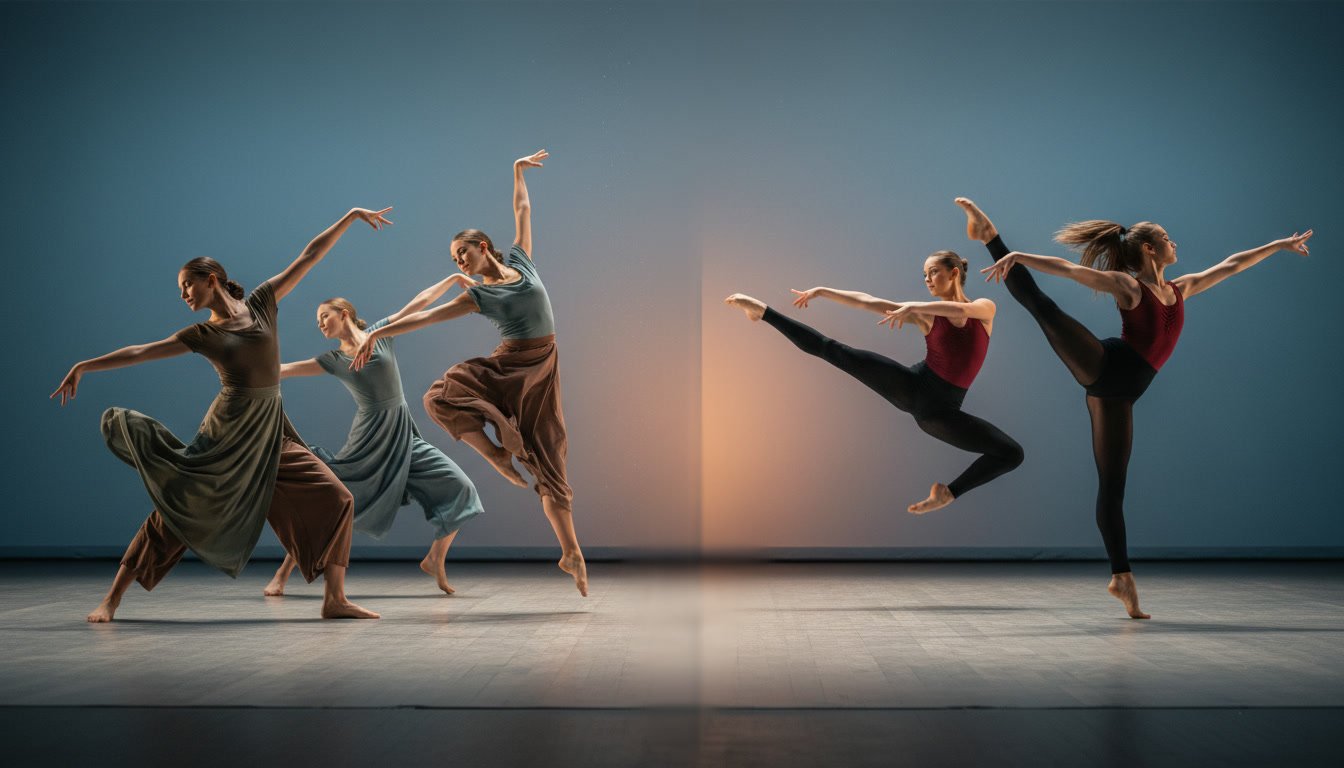
Contemporary and modern dance share common roots but offer different pathways for young dancers. Contemporary emphasizes fluid movement and emotional storytelling through technique borrowed from ballet and jazz, while modern dance focuses on grounded, weighted movement and personal interpretation. Parents exploring contemporary versus modern dance for their children often find that contemporary provides more immediate emotional connection, while modern builds stronger foundational awareness of body mechanics and spatial relationships.
Why Expression Matters in Early Dance Training
Young dancers benefit most when they learn to connect physical movement with emotional intention. Technical skill alone creates performers who can execute steps correctly but lack the magnetism that captivates audiences. Expression transforms dance from mechanical repetition into meaningful communication.
Children who develop expressive skills early gain confidence in their bodies and their ability to communicate without words. This foundation serves them whether they continue dancing professionally or apply these skills to public speaking, athletics, or creative pursuits later in life.
The Historical Split Between Modern and Contemporary Dance
Modern dance emerged in the early 1900s as a rebellion against the rigid structure of classical ballet. Pioneers like Martha Graham and Doris Humphrey rejected ballet’s vertical lines and turned-out positions, instead grounding movement in the floor and exploring contraction and release through the torso.
Contemporary dance developed later, in the mid-20th century, as choreographers began blending modern techniques with ballet vocabulary. Rather than rejecting ballet entirely, contemporary dance absorbed its fluidity and line while maintaining modern dance’s emphasis on emotional authenticity and unconventional movement patterns.
How Modern Dance Builds Physical Awareness
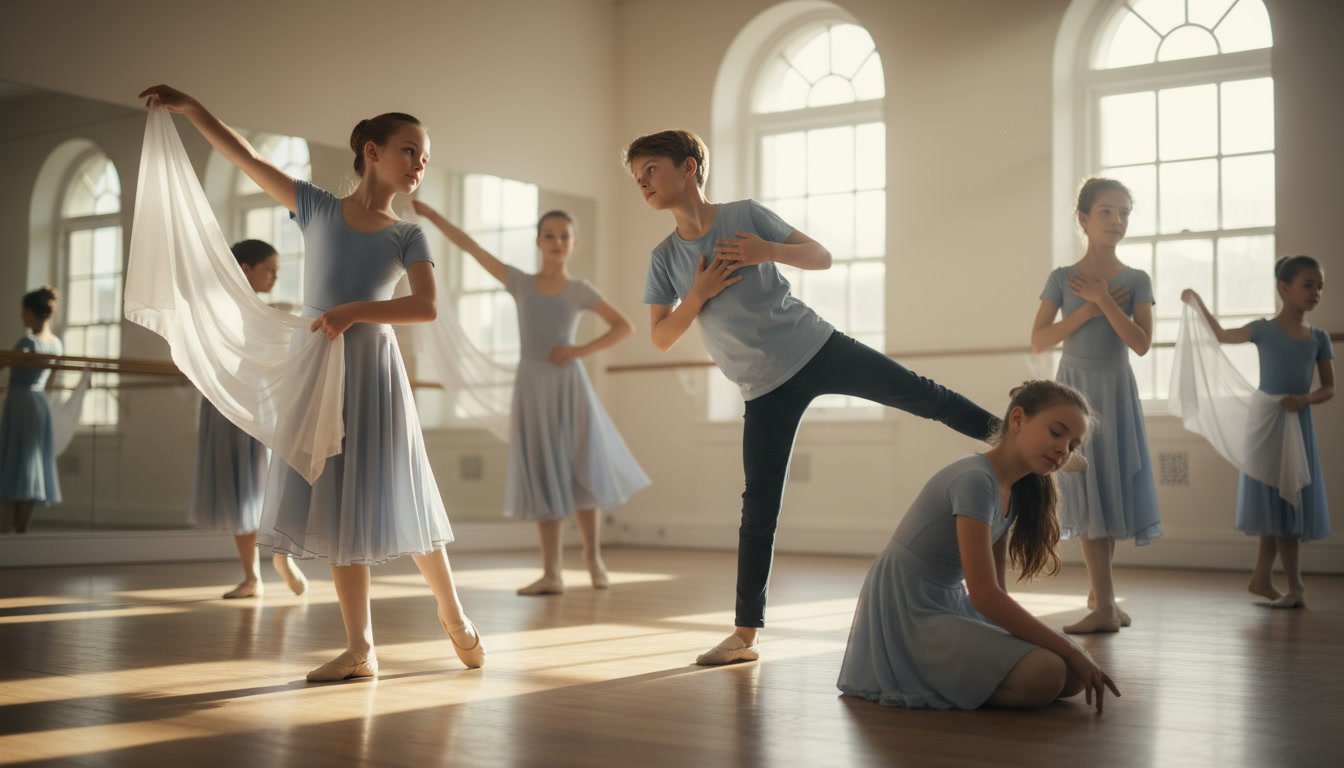
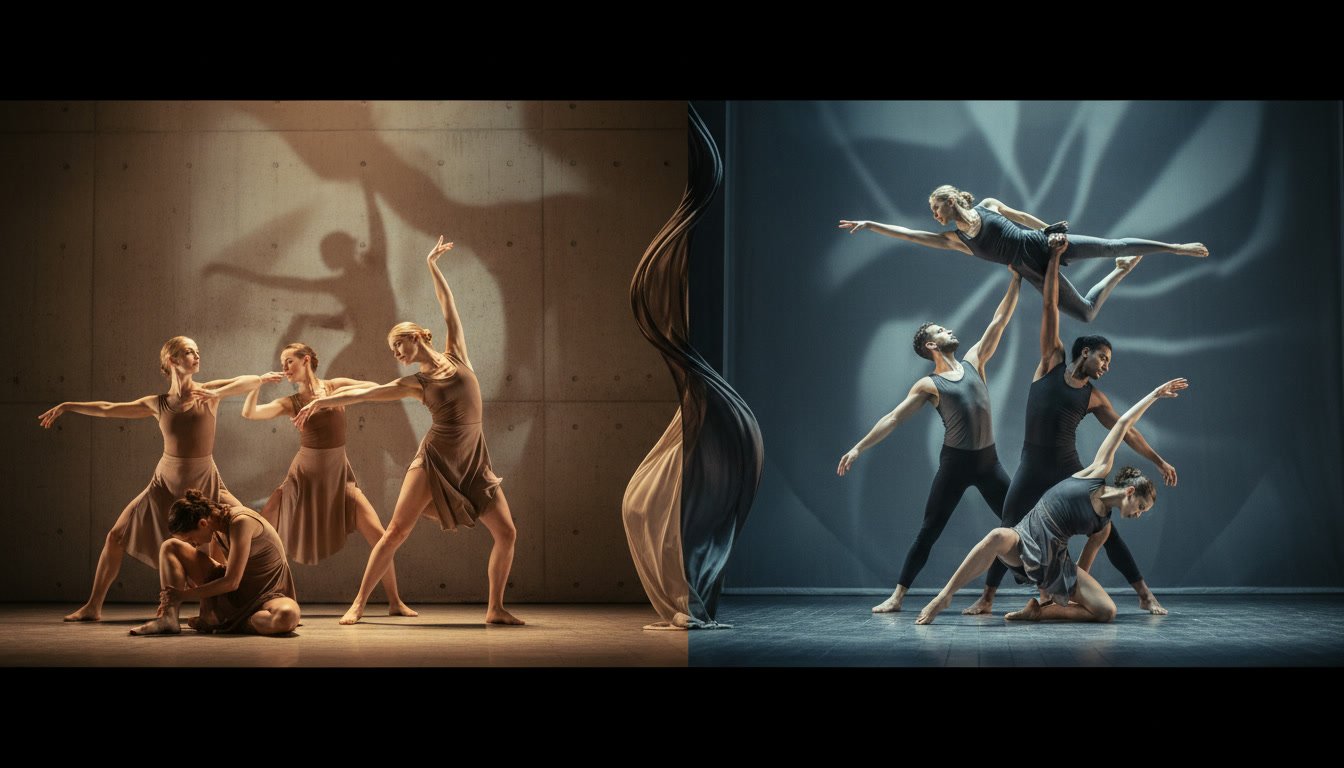
Modern dance teaches dancers to initiate movement from the core rather than the extremities. Students learn to feel the weight of their bodies, understanding how gravity affects each gesture. Floor work plays a central role, with dancers spending significant time sitting, lying, and rolling across the studio surface.
This approach develops proprioception, the body’s ability to sense its position in space. Young dancers trained in modern technique often display superior balance and spatial awareness compared to peers who focus exclusively on upright dance forms. They learn to fall safely, recover quickly, and use momentum rather than fighting it.
Contemporary Dance and Emotional Connection in Greenacres
Contemporary dance prioritizes the story behind the movement. Choreography often centers on specific emotions or narratives, asking dancers to embody feelings like joy, loss, or defiance through their physical choices. The style incorporates recognizable vocabulary from ballet and jazz, making it accessible to students who have trained in multiple disciplines.
At Lisa’s Dance and Exercise, teachers guide young dancers through exercises that connect specific emotions to movement qualities. A gesture of reaching becomes more powerful when a student understands whether they’re reaching for something just out of grasp or pushing something away.
Key Technical Differences Between the Two Styles
Modern dance emphasizes parallel positions, flexed feet, and angular shapes. Movements often originate from the pelvis or ribcage, with the spine playing a central role in creating dynamic shifts. Breathing patterns directly influence the timing and quality of gestures.
Contemporary dance incorporates turned-out positions borrowed from ballet, pointed feet, and flowing transitions. Dancers work to create seamless phrases where one movement melts into the next without visible breaks. The aesthetic values fluidity over the stark contrasts favored in traditional modern work.
Footwork and Weight Distribution
Modern technique keeps dancers closer to the floor, with bent knees and lowered centers of gravity. Contemporary allows for more verticality, including jumps and turns that require the lifted placement familiar from ballet training.
Music Relationship
Modern choreography sometimes uses silence or spoken word, teaching dancers to create rhythm internally. Contemporary typically works with lyrical or emotional music, allowing the score to guide phrasing and dynamics.
Which Style Accelerates Emotional Maturity
Contemporary dance’s direct focus on storytelling helps young dancers develop emotional literacy faster. When a teacher asks a seven-year-old to show sadness through a movement phrase, that child must identify what sadness feels like in their own body and translate it into physical form. This process builds emotional intelligence alongside technical skill.
Modern dance builds emotional depth more gradually through physical sensation. A student might not consciously perform sadness, but the weight and effort of a contraction-release pattern naturally evokes introspective qualities. The emotional understanding emerges from the movement itself rather than being imposed upon it.
How Ballet Foundation Affects Each Style
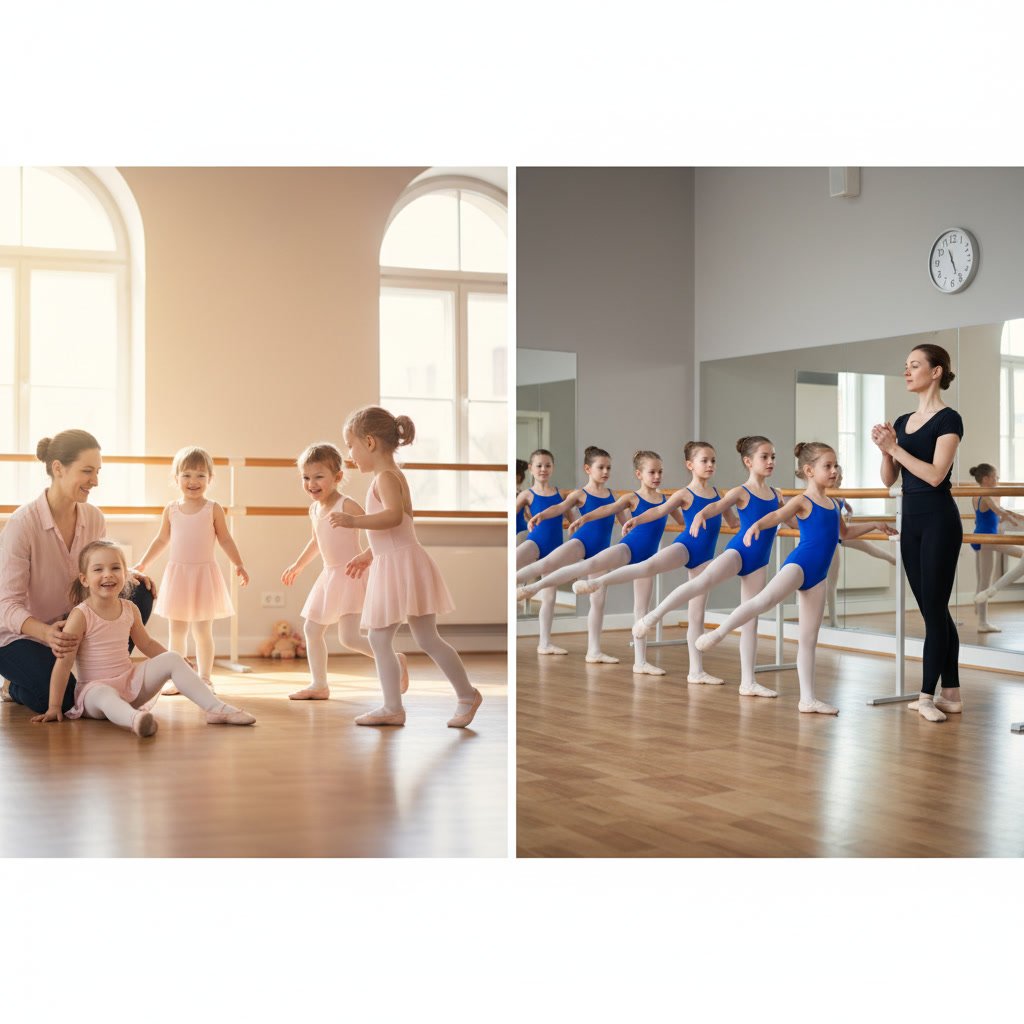
Students with ballet training transition more easily into contemporary dance because both styles value extension, turnout, and vertical alignment. The vocabulary feels familiar even when used for different expressive purposes.
Modern dance challenges ballet-trained students to unlearn certain habits. They must release their turnout, soften their knees, and abandon the lifted, elongated posture they’ve worked to develop. This can feel uncomfortable initially but ultimately expands their movement range and versatility.
Age-Appropriate Progressions for Young Students
Children under eight often respond better to contemporary’s more recognizable movement vocabulary. They can apply skills from jazz classes or basic ballet to contemporary choreography, building confidence through familiarity.
Students aged nine and older have the body awareness and cognitive development to appreciate modern dance’s more abstract concepts. They can process instructions about initiating movement from specific body parts and understand metaphors about weight and resistance.
Many dance programs introduce contemporary first, then layer in modern technique as students mature. This progression mirrors how the dance styles themselves evolved historically.
Cross-Training Benefits for Complete Dancers
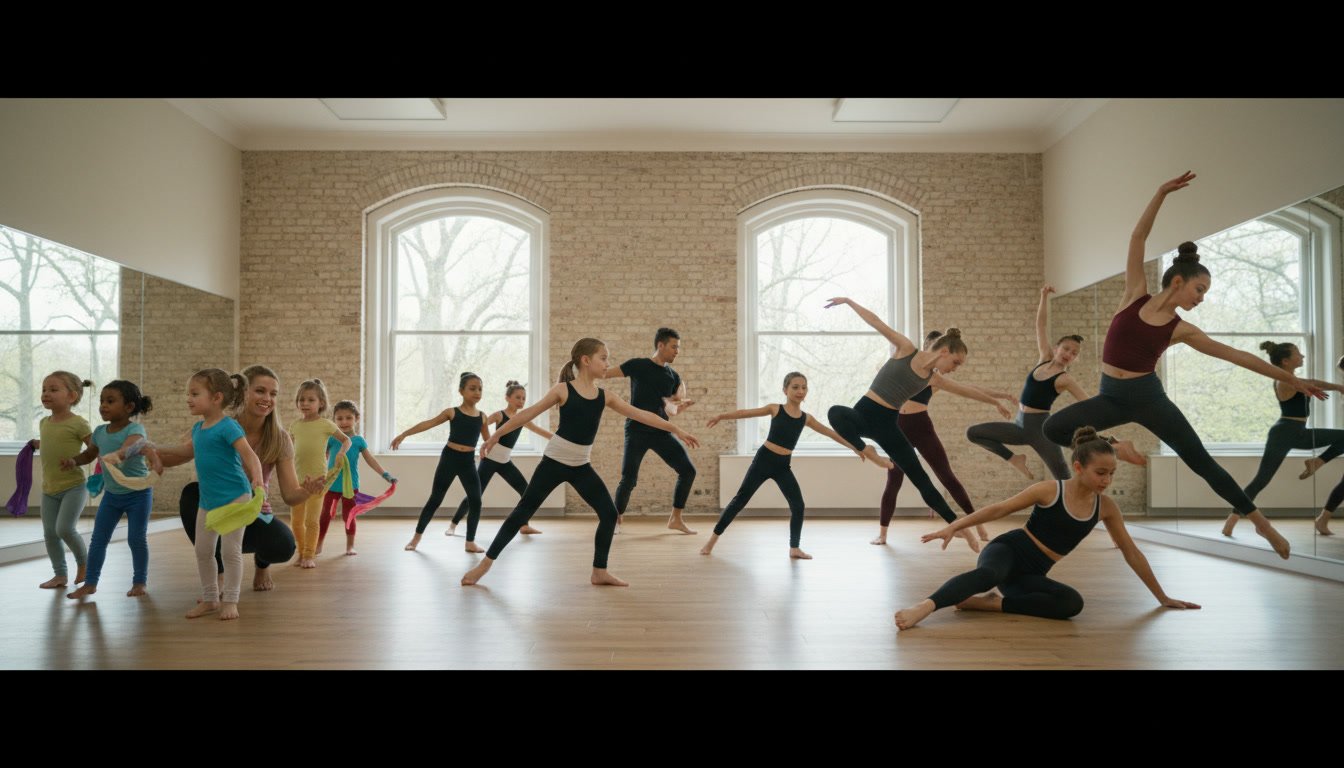
The most well-rounded young dancers study both styles rather than choosing one exclusively. Contemporary training teaches them to connect emotionally with choreography and audiences. Modern technique builds the physical intelligence they need to execute complex movement safely and efficiently.
Students who train in both styles show greater adaptability when learning new choreography. They can shift between grounded and lifted qualities, between angular and fluid shapes, and between internally and externally motivated movement. This versatility serves them whether they pursue competitive dance, musical theatre, or recreational classes.
Building Foundations That Last Beyond Childhood
The question of which style builds better expressive foundation depends partly on each child’s natural inclinations and learning style. Some children are natural storytellers who thrive on contemporary’s narrative approach. Others are kinesthetic learners who understand their bodies better through modern’s emphasis on weight and physics.
Both styles teach essential skills that translate beyond the dance studio. The body awareness from modern dance helps young athletes understand proper alignment and injury prevention. The emotional connection from contemporary dance builds empathy and communication skills valuable in any social setting.
Teachers with training in multiple techniques can guide parents toward the style that matches their child’s current developmental stage and personality. Parents who choose studios offering both options give their children the flexibility to explore each approach and discover which resonates most deeply.
Finding the Right Path for Your Young Dancer
Contemporary dance offers young students immediate emotional engagement and builds on familiar ballet and jazz vocabulary, making it accessible for children beginning their expressive journey. Modern dance develops deeper physical intelligence and body awareness that supports all future movement training. Neither style is universally superior for building expressive foundation.
Lisa’s Dance and Exercise provides expert instruction in both contemporary and modern dance, with teachers who understand how each style serves different aspects of a young dancer’s development. Our faculty includes instructors trained at institutions like the Joffrey School of Ballet and the Maltz Jupiter Theatre Conservatory, bringing professional-level insight to classes for children at every stage. Whether your child responds to contemporary’s emotional storytelling or modern’s grounded physicality, they’ll find supportive instruction that builds both technical skill and authentic expression. Call (561) 317-5738 to discuss which classes best match your child’s learning style and dance goals.