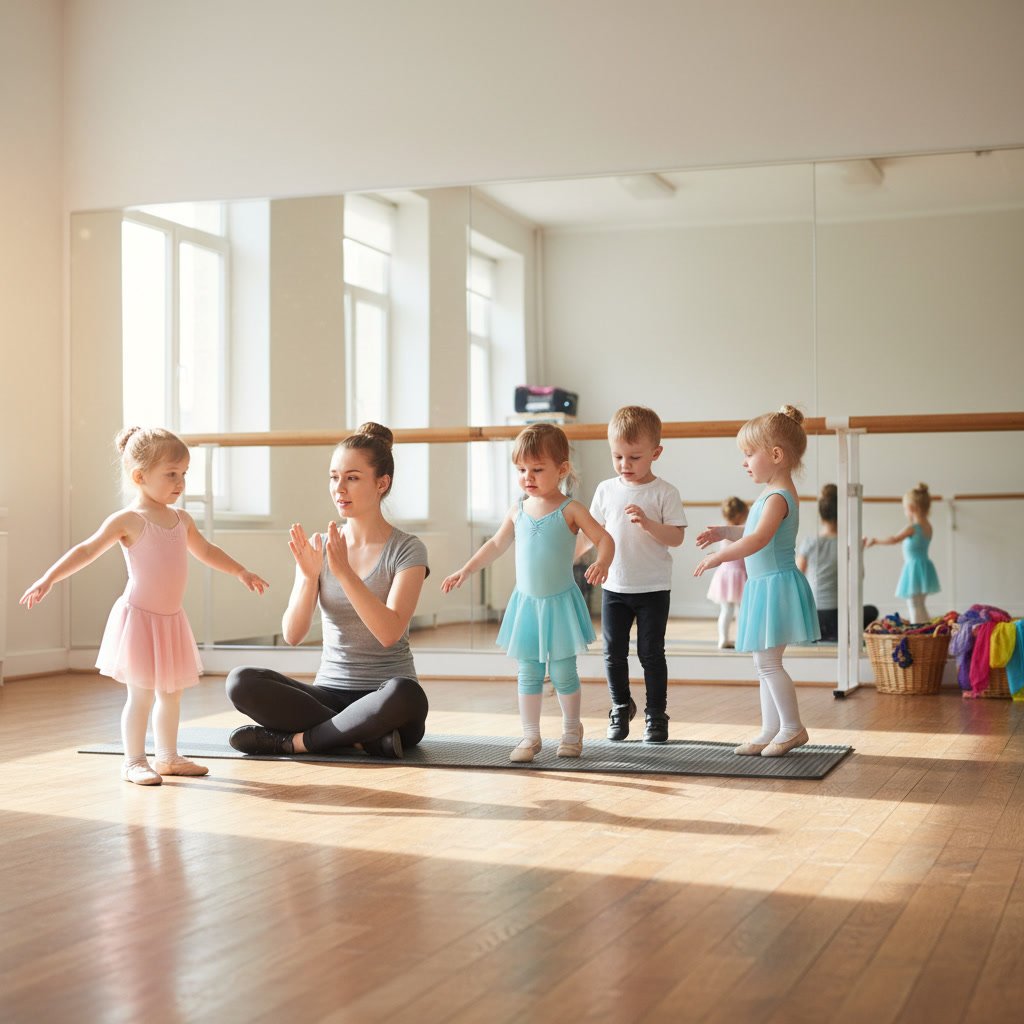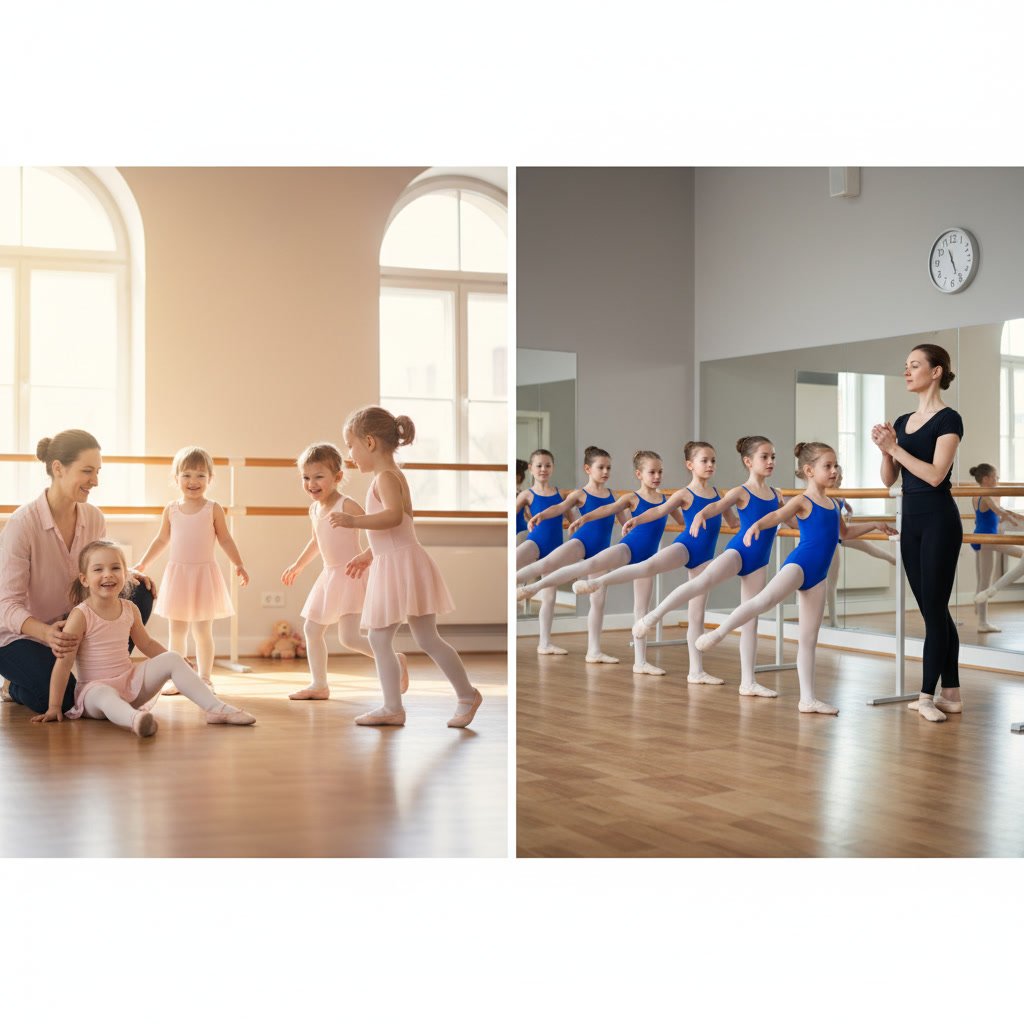
Ballet class expectations differ significantly between four-year-olds and seven-year-olds because of dramatic changes in physical coordination, attention span, and emotional maturity during these formative years. At four, classes emphasize creative movement, basic spatial awareness, and building comfort in a structured environment, while seven-year-olds begin formal ballet technique, longer combinations, and increased personal accountability. The shift reflects both developmental milestones in childhood and the progressive nature of classical ballet training, where foundational play gradually evolves into disciplined artistic practice.
Why Age Matters in Early Dance Education
The developmental gap between a four-year-old and a seven-year-old represents one of the most significant transformation periods in childhood. Four-year-olds are still developing gross motor skills like balancing on one foot or coordinating arms and legs simultaneously. Their attention spans typically max out around eight to twelve minutes for focused activity, and abstract concepts like left versus right remain challenging.
By age seven, children enter what developmental psychologists call the concrete operational stage. They can follow multi-step instructions, understand cause and effect relationships, and begin to self-correct movements. Their bodies have developed better proprioception, the internal sense of where limbs are positioned in space, which is essential for replicating ballet positions accurately.
What Four-Year-Olds Actually Do in Ballet Class
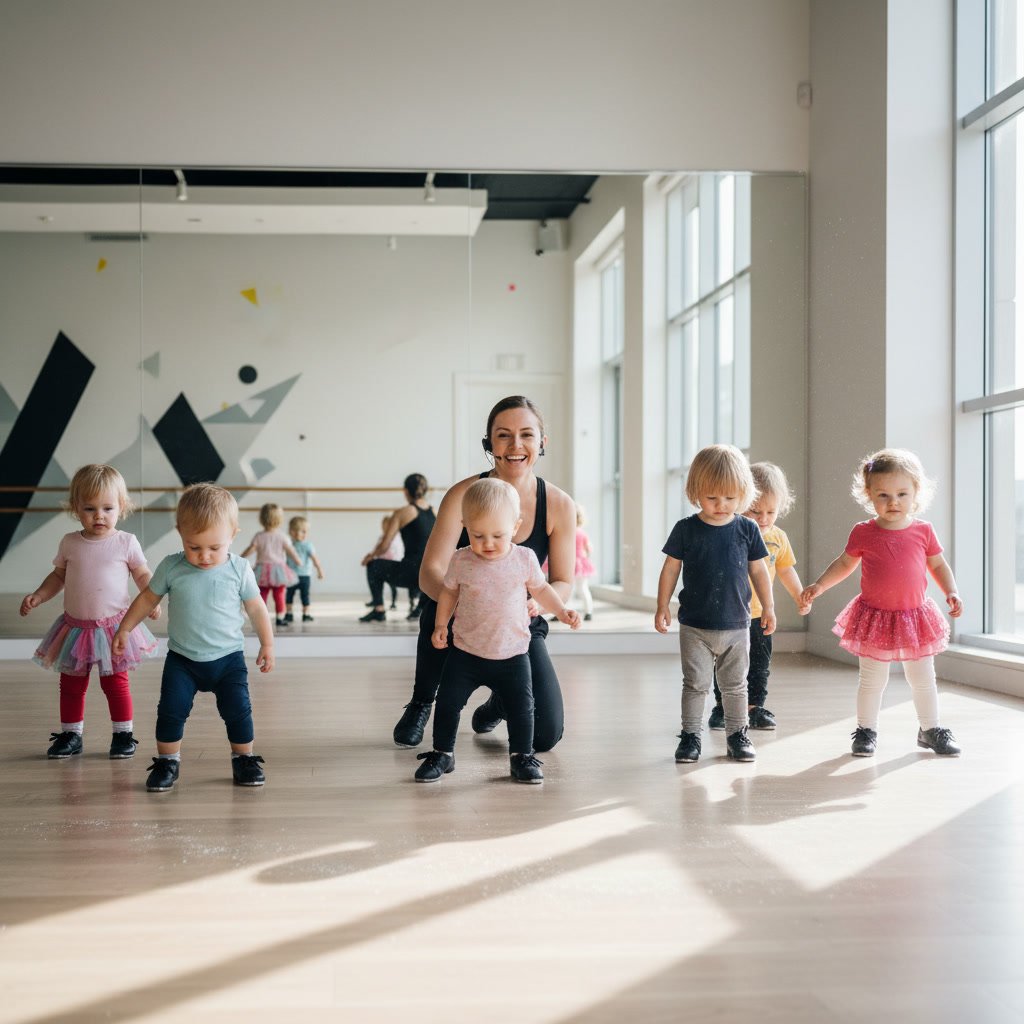
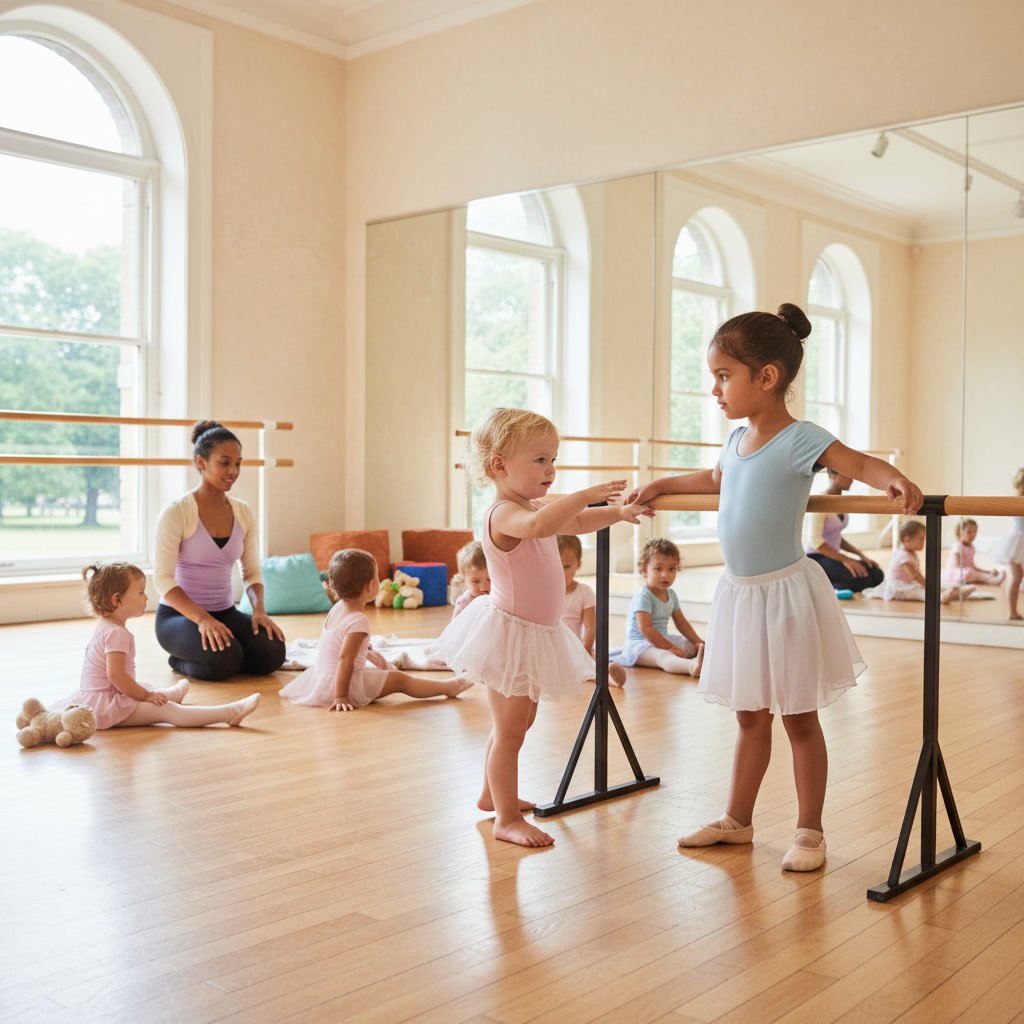
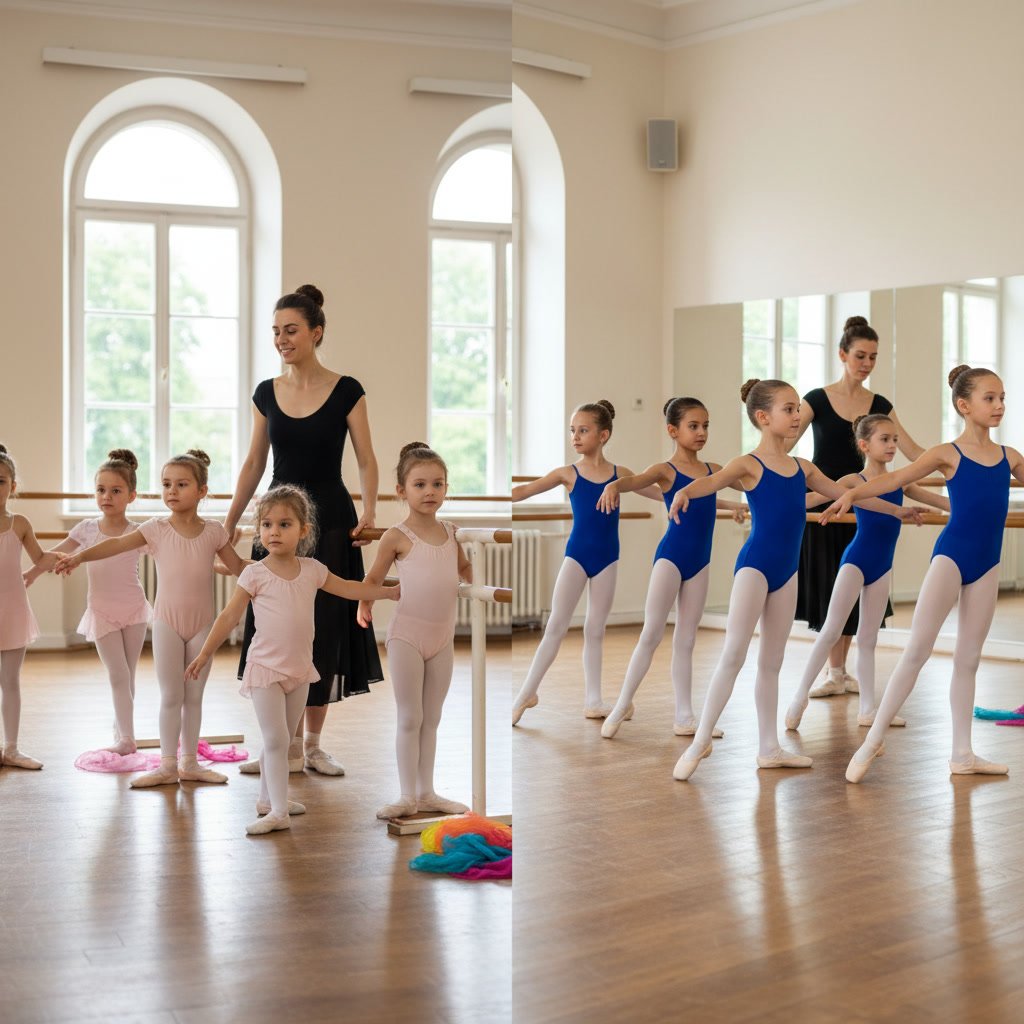
At four years old, Ballet and Tap classes focus heavily on imaginative play that introduces dance concepts without formal terminology. Teachers use animal walks, storytelling, and props to build strength and coordination. A typical activity might involve “being a frog” to practice pliés or “growing like a tree” to work on balance and posture.
Class structure for this age group changes every few minutes to match their natural attention patterns. Ten minutes of creative movement might be followed by five minutes of across-the-floor traveling steps, then a brief water break. The goal is building positive associations with dance while sneaking in fundamental skills like listening to music, moving through space without bumping into others, and following simple directions.
Teachers at this level expect occasional emotional outbursts, bathroom emergencies, and the need for frequent positive reinforcement. Success is measured in small victories: a child who stays on their designated spot for an entire song, or remembers to point their toes even once during class.
The Seven-Year-Old Transition to Technique
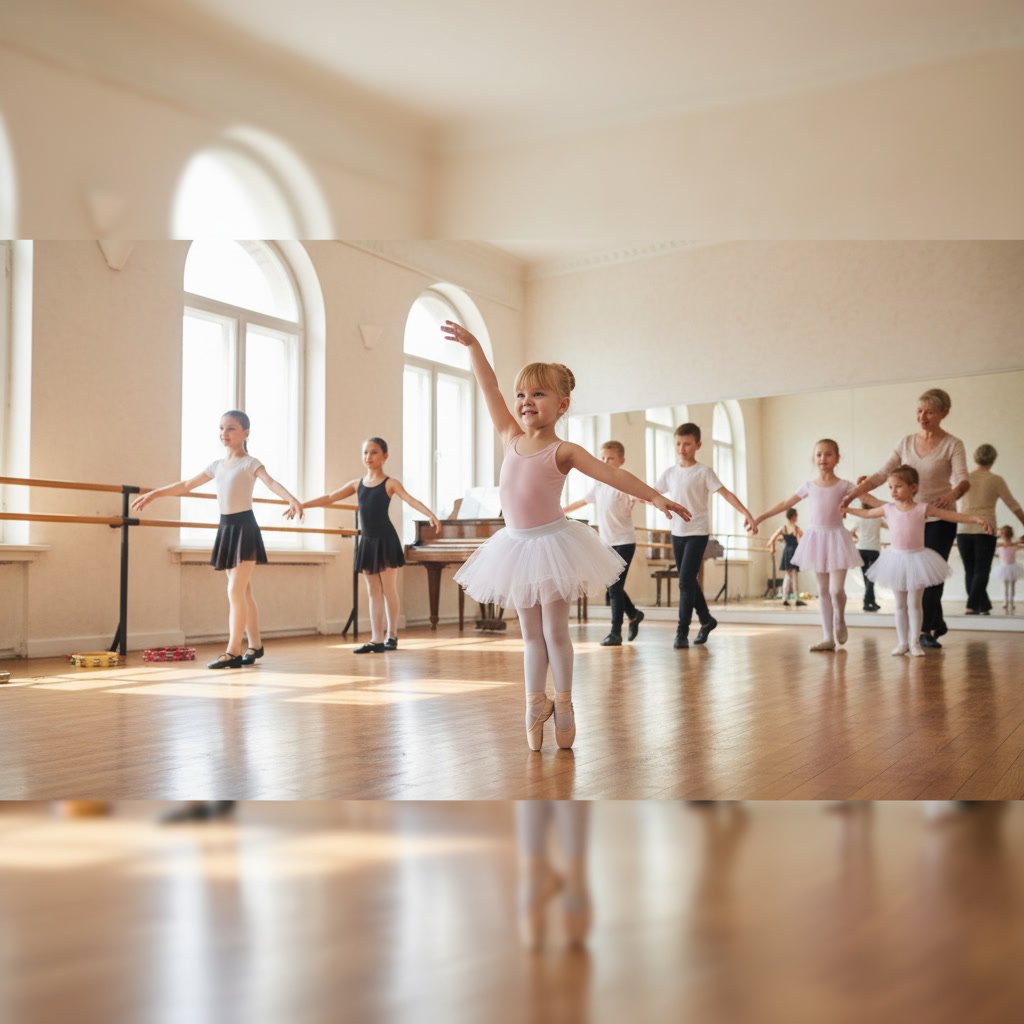
Seven-year-old dancers in Greenacres begin learning proper French ballet terminology and can distinguish between first, second, and fifth positions. They start every class at the barre for structured exercises rather than creative play on the floor. A typical barre warm-up might include pliés in two positions, tendus to the front and side, and relevés, all performed with increasing attention to alignment.
The language of instruction shifts from imaginative cues to technical corrections. Instead of “make your legs strong like a superhero,” teachers might say “engage your quadriceps and pull up through your core.” While still age-appropriate, the vocabulary becomes more precise because seven-year-olds can grasp and apply specific anatomical instructions.
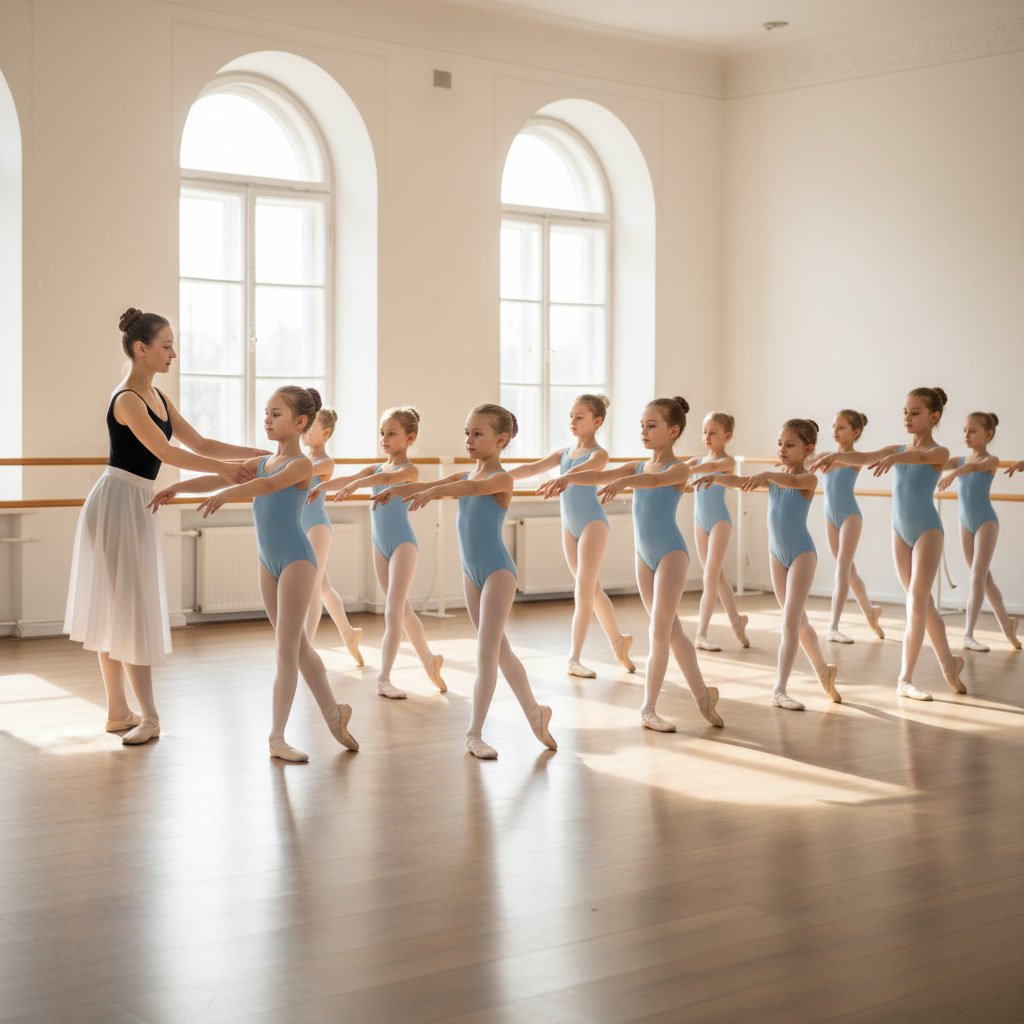
Class duration extends from 30 or 45 minutes to a full hour, and the expectation is that students remain focused for longer segments. Teachers might spend 20 minutes at the barre, 15 minutes on center work, 15 minutes on across-the-floor combinations, and 10 minutes on reverence or cool-down stretching.
Physical Abilities and Coordination Differences
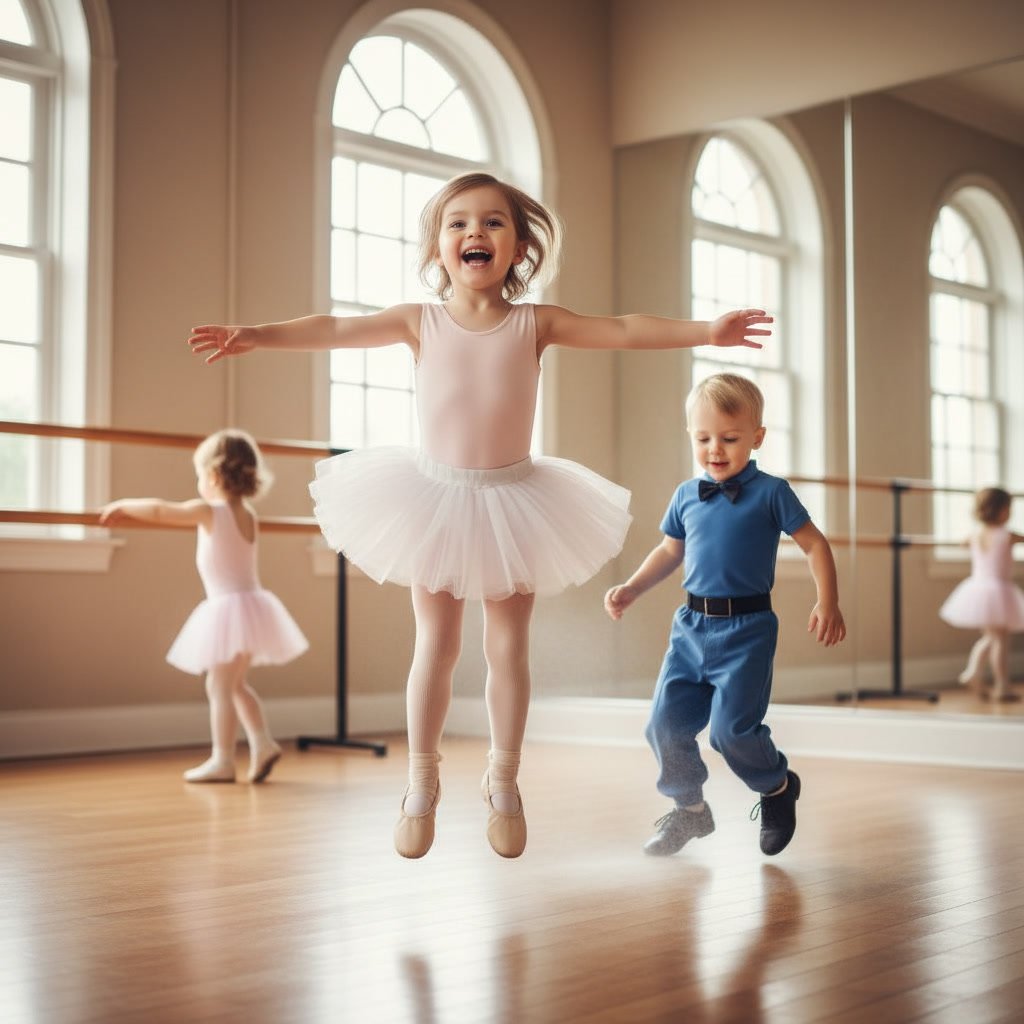
Four-year-olds are still developing the ability to skip with alternating feet, which is why choreography at this age uses gallops, marches, and simple runs instead of complex traveling steps. Their balance is inconsistent, so holding a passé position for more than two seconds would be exceptional. Most four-year-olds cannot yet safely execute a proper pirouette because their vestibular system, which controls balance and spatial orientation, is still maturing.
Seven-year-olds typically have the physical capacity to balance on one leg for 10 seconds or longer, execute clean sautés (jumps in first position), and begin working on single pirouettes from fifth position. Their increased muscle control allows for isolated movements, such as pointing just the foot while keeping the leg relaxed, which is nearly impossible for most preschoolers.
Attention Span and Class Structure Comparison
The structure of a four-year-old class intentionally mirrors preschool activities more than formal dance training. Circle time, story-based themes, and frequent activity changes keep young minds engaged. Teachers rarely demonstrate a combination more than once or twice before letting students try it, because over-explanation leads to restlessness and distraction.
Seven-year-old classes resemble true dance training. Students watch a combination demonstrated, mark it with smaller movements while counting, then perform it full-out. They are expected to remember three to five different exercises performed at the barre and recall them when repeated on the second side. This cognitive demand would overwhelm a four-year-old but appropriately challenges an early elementary student.
Social and Emotional Maturity in the Studio
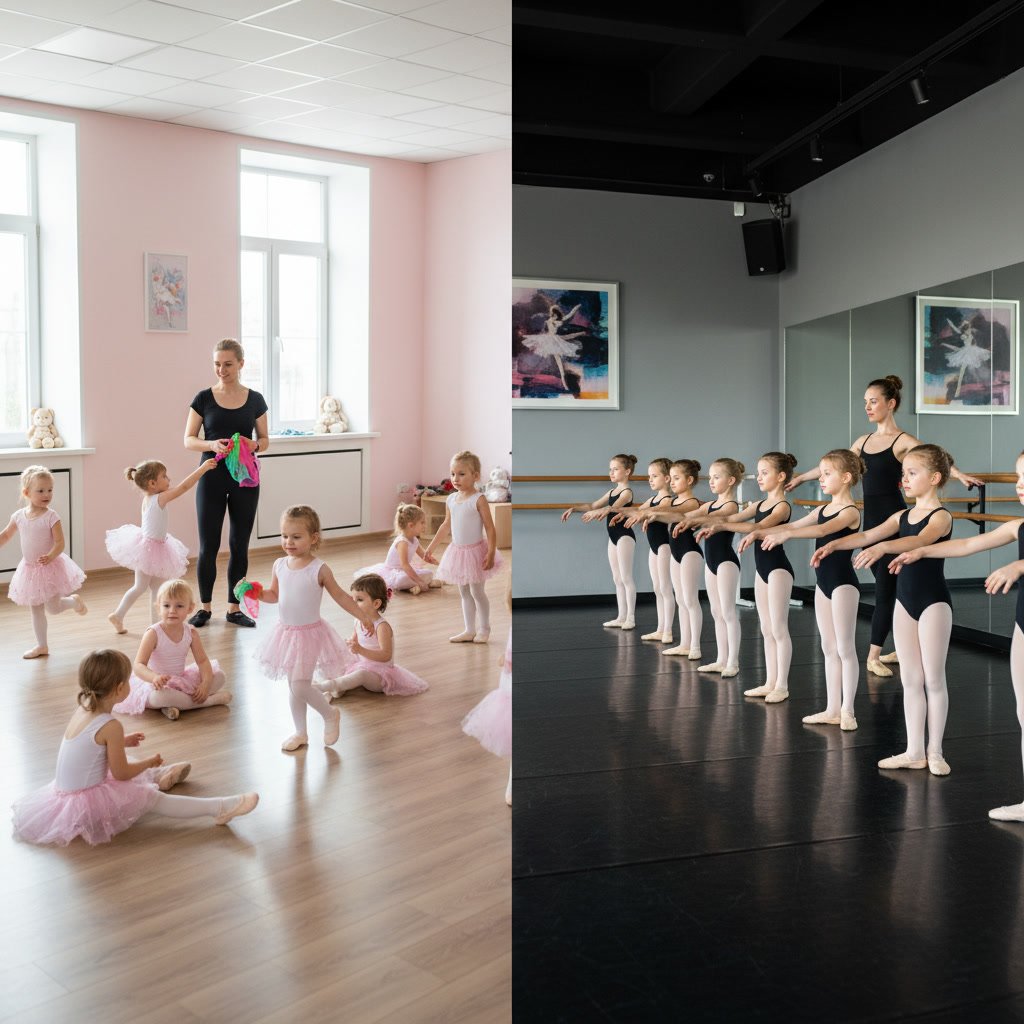
Four-year-olds often struggle with concepts like personal space and taking turns. A significant portion of class time at this age involves social-emotional learning disguised as dance: waiting for your turn to leap across the floor, celebrating when a classmate does well, and managing disappointment when you do not get to be the line leader.
By seven, most children have internalized basic classroom behavior expectations from regular school. They can handle constructive feedback without tears, understand that corrections help them improve rather than signal failure, and begin to develop intrinsic motivation to master difficult skills. This emotional resilience allows teachers to provide more direct technical feedback without damaging a child’s confidence.
Discipline and Independent Responsibility
Parents of four-year-olds should expect teachers to physically guide their child into positions, remind them multiple times to stay on their spot, and redirect off-task behavior with gentle prompts. This hands-on approach is developmentally appropriate and necessary. Expecting a four-year-old to self-correct alignment or remember to bring their dance bag into the studio without help sets up unrealistic standards.
Seven-year-old students begin to take ownership of their dance education. They remember to bring their ballet shoes without parental reminders, fix their own hair before class, and even start to self-correct in the mirror. Teachers can assign simple homework, like practicing tendus at home or stretching daily, with reasonable expectations that students will attempt it. This growing independence mirrors what happens in their regular academic environment and prepares them for more advanced training.
Skill Progression Milestones Between Ages Four and Seven
At four, ballet skill milestones include learning to stand in first position, executing a two-foot relevé without holding onto anything, and completing a simple eight-count combination like four marches forward and four marches back. Many preschool programs also weave in elements from other styles, which is why Lisa’s Dance and Exercise pairs ballet instruction with tap for the youngest students, keeping variety high and boredom low.
By seven, students should demonstrate all five basic ballet positions of the feet, execute clean tendus and dégagés in multiple directions, hold simple balances like coupé or low passé for several seconds, and perform basic jumps with proper landing technique. Some advanced seven-year-olds begin introductory pointe preparation exercises, though actual pointe work remains years away. The cumulative nature of ballet means that each skill builds on previous ones, making consistent attendance and practice increasingly important.
How Teachers Adapt Communication Styles
Effective teachers understand that a four-year-old processes information differently than an older child. Instructions must be concrete and linked to familiar experiences. Rather than saying “externally rotate from the hip,” a teacher might say “turn your knees out like a duck.” Demonstrations must be exaggerated and repeated frequently, and verbal instructions work best when paired with physical modeling.
With seven-year-olds, teachers can introduce anatomical reasoning: “When you turn out from your hips instead of forcing your feet, you protect your knees and build stronger muscles.” This age group responds well to understanding why a correction matters, not just what to do differently. They can also handle more nuanced feedback like “your arms are lovely, but remember to keep your shoulders down” without feeling overwhelmed by multiple corrections at once.
When to Consider Additional Dance Styles
Many four-year-olds thrive when ballet is paired with complementary activities that satisfy their need for variety and expression. Classes that combine multiple elements prevent burnout and expose young children to different movement vocabularies. Some families discover their child gravitates more strongly toward energetic styles, which might lead them to explore Hip-Hop or Jazz and Acro options as they grow.
By age seven, students often have developed clear preferences and may ask to add classes in Contemporary or Musical Theatre to their schedule. The discipline and body awareness gained from ballet creates an excellent foundation for branching into other dance forms. Teachers can offer informed guidance about which styles complement each other and how many classes per week appropriately challenge a child without causing physical or mental fatigue.
Setting Your Child Up for Success at Any Age
Understanding these developmental differences helps parents set realistic expectations and celebrate appropriate progress. A four-year-old who participates happily for 30 minutes, even if they spend half the class doing their own creative interpretation, is succeeding. Forcing rigid classical technique on a preschooler can backfire, creating negative associations with dance that persist for years.
For seven-year-olds, success looks like steady technical improvement, growing confidence in performing combinations, and developing a genuine love for the art form. Parents should expect their child to occasionally struggle with new skills and experience frustration, which are normal parts of the learning process. The goal at this age is building both competence and resilience, preparing students for the increased demands of intermediate and advanced ballet training in the years ahead.
Parents looking for a studio that understands these crucial developmental differences will find that experienced teachers tailor every aspect of class to match where children actually are, not where a rigid curriculum says they should be. Lisa’s Dance and Exercise has spent over a decade refining age-appropriate programming that meets young dancers exactly where they are developmentally while gently guiding them toward the next milestone.
If you are ready to enroll your child in a ballet program that respects their unique developmental stage and builds skills at an appropriate pace, reach out to our team at +15613175738 to discuss which class best fits your child’s age and experience level.